
A jacket can look great on the hanger and still become the piece you leave in the closet because the shoulders pull, the sleeves get in the way, or it only works over one thin shirt. This women's jacket fit guide is for finding a layer that can handle a regular Tuesday: dropping off kids, answering emails, running errands, and grabbing groceries without requiring a second outfit.
The goal is not to find one "perfect" jacket for every weather forecast or every outfit. It is to know what a good fit feels like for the kind of jacket you are buying, so getting dressed takes one less decision.
Start With What You Will Wear Under It
Before looking at a size, think about the layers you actually wear. A lightweight denim jacket over a tee needs different room than a puffer you plan to wear over a sweater. This sounds obvious, but it is the fastest way to avoid ordering a jacket that technically fits but does not work in real life.
For a casual jacket, try it on over the kind of top you reach for most often. If you live in soft tees and lightweight long sleeves, use one of those. For colder-weather outerwear, use a sweater or sweatshirt that is similar in thickness to your usual go-to layer.
You should be able to zip or button the jacket without holding your breath, sucking in, or changing how you stand. A little extra space is useful in outerwear. Too much extra space, though, can make sleeves slide down and make a shorter jacket feel bulky. The right amount depends on the style and the fabric.
A structured blazer may be meant to sit closer to the body. A shacket, utility jacket, or puffer often has a more relaxed fit on purpose. Read the fit description before sizing down just because a jacket is labeled oversized. Room through the body can be practical. Room that makes the shoulders fall past your shoulder line usually is not.
The Women's Jacket Fit Guide: Check These Four Areas
Fit is easier to judge when you check it in the same order every time. Start with the shoulders, then move to the chest and back, sleeves, and length.
1. Shoulders: The First Place to Look
The shoulder seam should generally land at the edge of your natural shoulder. When it does, the jacket will move more comfortably through your arms and look more balanced over the rest of your outfit.
A dropped-shoulder style is the exception. Its seam is designed to sit lower on the arm for an easy, relaxed shape. In that case, look at the product photos and description rather than trying to force the seam back into a traditional spot.
If a standard shoulder seam sits well inside your natural shoulder, the jacket may feel tight across the upper back, especially when you reach for a car seat, carry a bag, or lift your arms. If it hangs far past the shoulder and the style is not intentionally oversized, it can feel like you are borrowing someone else's jacket.
2. Chest and Back: Give Yourself Room to Move
Zip or button the jacket, then cross your arms and reach forward. You are looking for normal movement, not a stiff test of endurance. A jacket should not pull sharply across the chest or upper back, and you should not feel the lining catch when you move.
A little horizontal tension when you fully stretch is normal, especially in a fitted blazer or denim jacket with little stretch. Constant pulling while standing or sitting is a sign you may prefer the next size up or a different cut.
Pay attention to where the jacket feels snug. A jacket can be roomy at the waist but tight in the upper arms. That does not mean there is anything wrong with your body or that you need to settle for it. It simply means the cut is not giving you the room you need. Look for relaxed sleeves, stretch fabric, a slightly roomier silhouette, or measurements that better match your favorite jacket.
3. Sleeves: Make Sure They Work With Your Hands
Sleeves should let you use your hands without constantly pushing them up. For most jackets, the cuff should land around the wrist bone or just below it when your arms rest at your sides. When you reach forward, the sleeve will naturally lift a bit. That is normal.
If cuffs ride halfway up your forearm with basic movement, the sleeves are likely too short. If they cover most of your hand, they may be too long unless the jacket has adjustable cuffs or a deliberately roomy, cozy look.
Also check the upper arm. This is an easy detail to miss in a mirror, but it matters when you are driving, pushing a cart, or carrying everything from the car in one trip. You want enough room to bend your arms without the fabric feeling restrictive.
4. Length: Match It to Your Usual Bottoms
Jacket length changes how useful a piece feels with your everyday outfits. A cropped jacket can be easy with high-rise jeans, leggings, dresses, and jumpsuits, especially when you want a little shape without extra bulk. It may not be your favorite choice over long tunics or when you want more coverage.
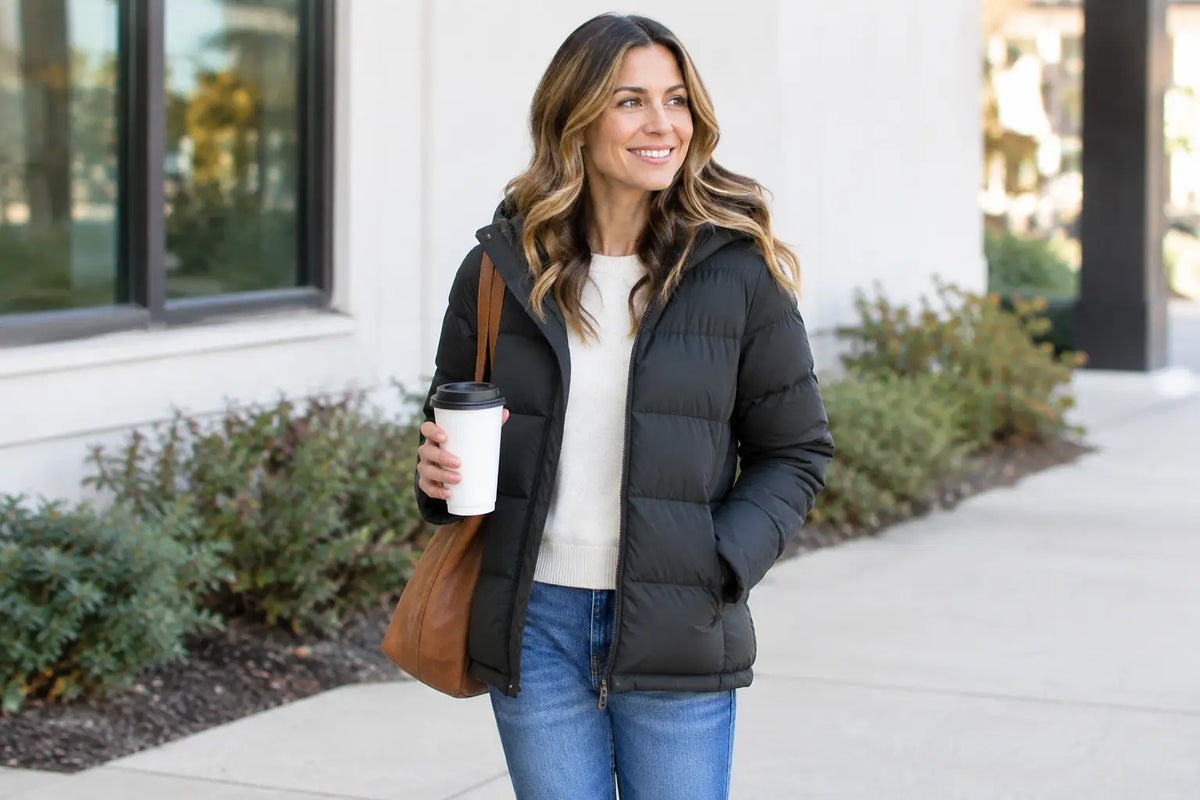
Hip-length jackets are often the most flexible for daily wear. They pair easily with jeans, straight-leg pants, leggings, and casual dresses, and they usually stay put when you sit in the car. Longer layers can be helpful in colder weather and look especially balanced with slimmer bottoms, but they can feel like too much fabric if you prefer shorter tops or are constantly moving between the car, school, and stores.
There is no universally flattering length. The useful length is the one that works with the bottoms you already own and the way you spend your day.
Use Measurements, Not Just the Size on the Tag
Women's sizing is not consistent from brand to brand, and jackets are especially varied because fabric, lining, stretch, and intended silhouette all affect fit. Your usual size is a helpful starting point, not a promise.
When measurements are available, compare them with a jacket you already wear often. Lay your jacket flat, smooth it gently, and measure across the chest from underarm to underarm. You can also measure the sleeve from the shoulder seam to the cuff and the body length from the highest point of the shoulder down to the hem.
Compare those numbers with the product details, keeping the garment's intended fit in mind. A jacket with no stretch may need a little more room than one with stretch. A lined puffer can feel more substantial than an unlined utility jacket, even when the measurements look similar.
If you are between sizes, ask yourself what matters most for that specific style. Size up when you need room for sweaters, prefer easy movement through the arms, or plan to wear the jacket zipped often. Stay with the smaller size when the jacket is already designed to be oversized, the fabric has stretch, or you mostly plan to wear it open over lighter layers.
Fabric Makes a Real Difference
The same measurements can feel completely different depending on the fabric. Denim and woven twill often soften with wear but may not offer much stretch at first. A jacket with spandex or elastane can move more easily, though it may fit closer to the body. Knit layers usually feel flexible and relaxed, while quilted and padded jackets need enough space to move without adding unnecessary bulk.
Lining matters too. A smooth lining can make a structured jacket easier to pull on over a long-sleeve top. An unlined layer may feel lighter and less formal, which can be exactly what you want for mild weather and quick errands.
Think about care before making a jacket your everyday grab-and-go layer. If it needs delicate handling and you know it will be worn around snacks, playground dust, and car rides, it may be better as an occasional piece. The jacket you can actually wear often is usually the better buy.
A Quick Try-On Test Before You Keep It
Once a jacket is on, do more than stand still in front of the mirror. Sit down. Reach for something on a shelf. Cross your arms. Put your hands in the pockets. Zip it, then unzip it. These small movements tell you more than a quick glance ever will.
Ask whether you would reach for it with your usual jeans, leggings, work pants, or dresses. If it only works with one carefully planned outfit, it may not earn much closet time. A good everyday jacket should make the clothes you already wear feel finished without making them feel fussy.
At J&H Apparel, fit details are there to make shopping easier, not to make you overthink your body or your wardrobe. Use the measurements, picture your real layers, and give yourself room to move. The right jacket is the one you can put on at the door without a second thought.