

That dress looked great on the hanger, but once it was on, something felt off. Usually, the problem is not your body. It is the cut, fabric, length, or proportion. If you have been wondering how to choose flattering dresses without overthinking every detail, the good news is that a few practical fit cues can make shopping much easier.
A flattering dress is not about hiding yourself or following rigid rules. It is about finding shapes that work with your proportions, feel comfortable through a real day, and give you that pulled-together feeling without a lot of effort. The best dress is the one that makes getting dressed feel fast, fun, and easy.
How to choose flattering dresses for real life
The easiest place to start is with fit through the shoulders, bust, waist, and hips. When those areas sit well, the whole dress looks better. Even a simple casual dress can look polished when the proportions are right.
If your shoulders feel tight, the dress will pull and never quite relax on your frame. If the bust area gaps or stretches, the silhouette gets thrown off. If the waist hits too high or too low, it can make the entire dress feel awkward, even if you love the print or color. These small fit details matter more than chasing every trend.
That is why it helps to shop with your everyday routine in mind. A flattering brunch dress may not be the same as a flattering workday dress or travel dress. You want something that looks good standing up, sitting down, walking around, and moving with you.
Start with silhouette, not size
Size is just a starting point. The shape of the dress matters more. Two dresses in the same size can fit completely differently depending on structure and stretch.
A-line dresses are one of the easiest options for everyday wear because they define the upper body and gently skim the hips. Fit-and-flare dresses create a similar effect, with a little more waist emphasis. Wrap dresses are another favorite because they adjust to your shape and create clean lines through the waist and neckline.
If you prefer a straighter silhouette, shirt dresses and sheath dresses can be very flattering, but the fit has to be more precise. A straight dress that is too tight can cling in the wrong places. Too loose, and it can lose shape entirely. In those cases, details like a tie waist, seaming, or a slight taper can make all the difference.
Bodycon styles can absolutely be flattering too, especially in fabrics with structure and stretch. The key is comfort. If you are constantly tugging, smoothing, or adjusting, it is probably not the right version of that silhouette for you.
How to choose flattering dresses by body proportion
This is where shopping gets easier. Instead of trying to fit your body into one dress category, look at your proportions and decide what you want to highlight or balance.
If you carry more shape through the hips and thighs, dresses with a defined waist and a skirt that skims outward often feel balanced and easy. If you carry more fullness through the midsection, styles with ruching, wrap fronts, soft draping, or an empire waist can create shape without feeling restrictive.
If your shoulders are broader or your bust is fuller, V-necks, scoop necks, and wrap necklines can open up the upper body in a really flattering way. If you have a straighter frame and want more shape, belted styles, fit-and-flare cuts, and dresses with seaming at the waist can add definition.
The goal is not to correct your body. It is to choose lines that make the dress feel balanced on you. Sometimes that means adding waist definition. Sometimes it means keeping the silhouette clean and simple. It depends on what feels best when you put it on.
Pay attention to where the waist hits
This is one of the most overlooked details, and it changes everything. A waist seam that lands at your natural waist usually creates the most balanced shape. If it hits above that point, the dress can read more youthful or breezy, which may be great for casual wear but less polished for certain occasions. If it hits too low, the dress can make your proportions look longer through the torso and shorter through the legs.
Tie-waist dresses are especially helpful because they give you some control. That flexibility can make one dress work for office days, dinners, travel, and weekends.
Think about hem length and leg line
Dress length changes the overall proportion of your outfit. Mini dresses can make legs look longer, but they are not always the most practical option for work, errands, or all-day wear. Midi dresses feel current and versatile, though the exact cut matters. A midi that hits at the widest part of the calf can feel less elongating than one that hits slightly below the knee or lower on the calf with a more fluid shape.
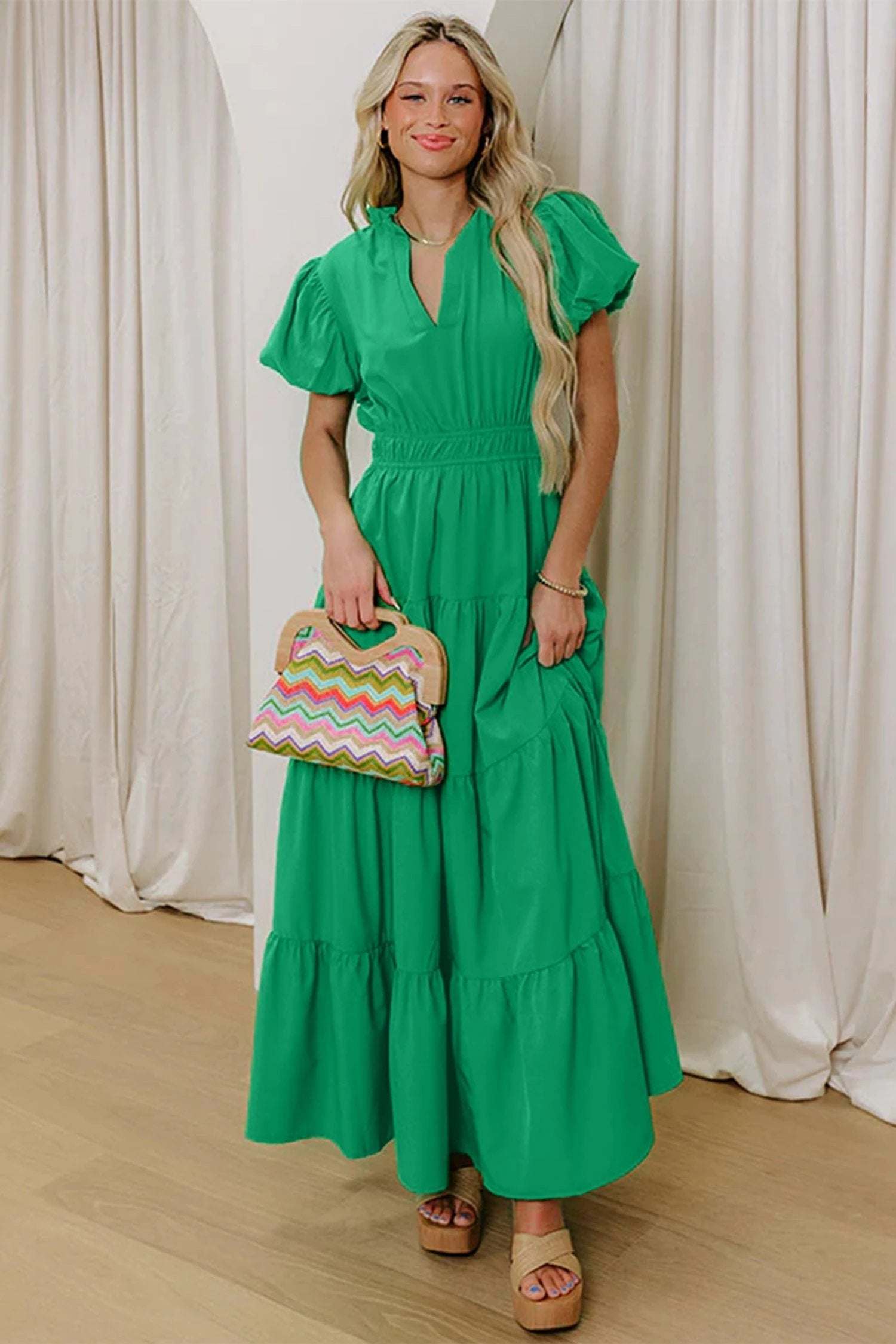
Maxi dresses are easy, comfortable, and flattering when the length is right. Too short, and they can look accidental. Too long, and they feel heavy. A little shape through the waist or a slit can keep a maxi from overwhelming your frame.
Fabric can flatter just as much as fit
A beautiful print or trendy cut will not save a fabric that does not move well. Material changes how a dress drapes, clings, stretches, and holds shape.
Soft jersey can be comfortable and forgiving, but very thin jersey may show every line. Structured cotton blends can look crisp and polished, though they may have less give. Satin can feel elevated for dinners or events, but it tends to highlight fit issues quickly if the cut is off. Ribbed knits can be flattering because they stretch with the body, but thickness matters.
If you want a dress that works across multiple settings, look for fabric with enough structure to keep its shape and enough softness to stay comfortable. That balance is what makes a dress feel wearable instead of fussy.
Prints, color, and details matter too
Flattering does not always mean plain. Color can brighten your face, lift your mood, and make a simple silhouette feel more styled. The trick is scale and placement.
Smaller prints usually read a little softer and more versatile. Larger prints can be bold and fun, but they have more visual impact, so silhouette becomes even more important. Dark colors can create a sleek look, while bright shades can draw attention exactly where you want it.
Details like ruching, smocking, vertical seams, buttons, and side slits also affect the final shape. Ruching can soften clingy areas. Vertical seams can create a longer line. Smocking can make fit easier through the bust and waist. These details are not just decorative. They change how the dress performs.
The best flattering dresses are easy to wear
A dress can look great in a fitting room and still fail in real life. That is why comfort matters. Can you sit comfortably? Walk normally? Move your arms? Wear it for more than twenty minutes without adjusting it? Those questions are worth asking before you buy.
This is especially true if you want pieces that work from day to night. A flattering everyday dress should be easy to style with sneakers, sandals, flats, or a low heel. It should work with a jacket when the weather changes. It should feel just as right at lunch as it does at dinner.
That is where versatile silhouettes really earn their place in your closet. A well-cut midi, a flattering wrap dress, or an easy fit-and-flare style can do a lot of work with very little effort. J&H Apparel focuses on that kind of wearability because most women are not dressing for one perfect photo. They are dressing for real schedules.
Quick fit checks before you commit
Before you keep a dress, look at it from the front, side, and back. Notice where the fabric pulls, where it falls smoothly, and whether the neckline, waist, and hem all feel in proportion.
Then ask yourself a few simple questions. Does this dress highlight a part of my shape that I like? Does it balance my proportions? Does it feel comfortable enough for the way I actually live? Does it work with shoes and layers I already own?
If the answer is yes, that dress is probably flattering. If you are trying to talk yourself into it because the trend is popular or the color is pretty, but the fit feels off, keep looking.
The right dress should make you feel like yourself, just a little more polished, a little more confident, and completely ready for whatever the day has planned.