
Buying jeans should not feel like guessing between three sizes, two inseams, and one possible return. A good denim sizing guide women can rely on starts with one truth: the number on the tag matters less than how the jeans are cut, how much they stretch, and where they sit on your body. When you know what to measure and what to expect from different fits, shopping gets a lot easier.
Jeans are one of the hardest wardrobe staples to get right because they do so much. They need to look polished enough for dinner, feel comfortable enough for errands, and still hold their shape through a full day. That is why fit matters more in denim than almost any other category. The right pair can make your whole outfit feel easy.
Why women’s denim sizing feels inconsistent
If you have ever been a size 6 in one pair and a size 10 in another, you are not imagining it. Women’s denim sizing is inconsistent across brands, and sometimes even across different styles from the same brand. A high-rise straight jean and a mid-rise skinny jean can fit completely differently, even with the same size printed inside.
A lot of that comes down to construction. Fabric blend changes the feel. Rise changes where the waistband lands. Leg shape affects how snug the hip and thigh area feels. Even washing techniques can make denim feel firmer or softer out of the package. That is why shopping by size alone usually leads to frustration.
The better approach is to shop by measurements, fit notes, and fabric details first, then use the labeled size as a starting point.
Denim sizing guide women should follow before ordering
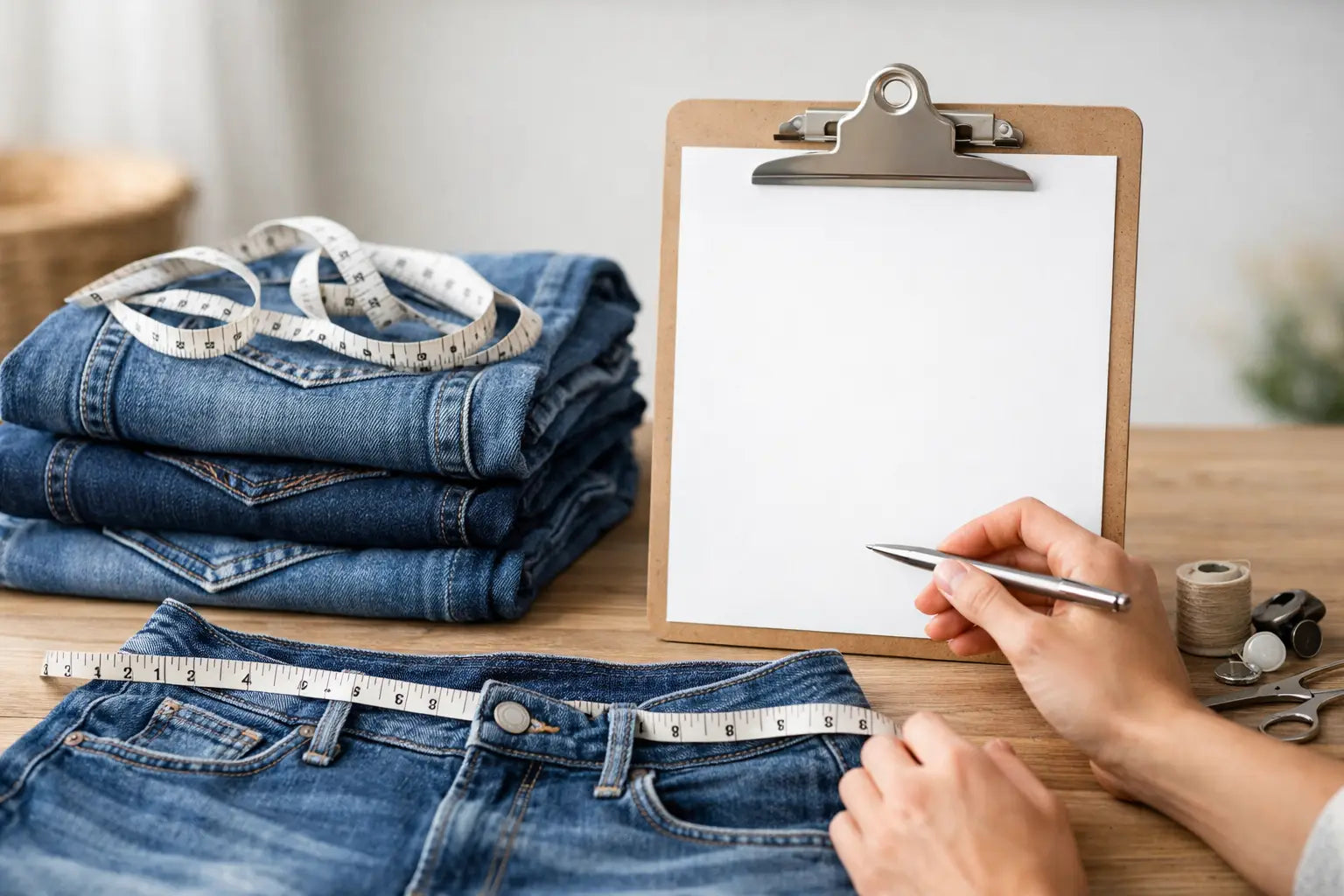
Before you add a pair to cart, take three measurements: waist, hips, and inseam. These are the numbers that give you the clearest starting point.
Your waist measurement should be taken around the narrowest part of your torso, usually a little above the belly button. Your hip measurement should be around the fullest part of your hips and seat. For inseam, measure from the inside top of the thigh down to where you want the jeans to hit. If you already own a pair of jeans you love, you can measure those too and compare.
This step matters because women’s denim often uses different sizing systems. Some brands use traditional numeric sizing like 2, 4, 6, and 8. Others use waist sizes like 26, 27, and 28. In most cases, those systems roughly translate, but not perfectly. That is why the size chart should always be your first stop.
If your waist and hip measurements point to two different sizes, think about the cut. If the jeans are rigid or mostly cotton, sizing up usually gives you a more comfortable fit through the hips and thighs. If the denim has stretch, staying closer to your waist measurement often works better because the fabric has room to move.
Know your rise before you choose your size
Rise changes the whole feel of a pair of jeans. High-rise styles sit at or above the natural waist and often feel more secure and smoothing. Mid-rise jeans sit a little lower and can feel more casual and familiar. Low-rise jeans sit below the waist and fit very differently through the hip.
This matters because rise affects where you need room. If you usually like high-rise jeans, you may want enough waistband space to sit comfortably without pinching. If you prefer mid-rise, you may be more focused on hip fit and gaping in the back. Neither is better. It depends on what feels flattering and easy for your day.
Stretch denim vs. rigid denim
This is where many fit mistakes happen. Stretch denim usually includes elastane or spandex, which gives the jeans flexibility and comfort. These styles often feel more forgiving right away and work well for long days, travel, and everyday wear. If the fabric has a good amount of stretch, it may relax slightly after a few hours.
Rigid denim, or low-stretch denim, has a more structured feel. It can create that classic, held-together look many women love, especially in straight-leg and vintage-inspired fits. But it usually needs a little break-in time. If rigid denim feels too snug in the fitting stage, it may not become your favorite pair later.
A simple rule helps here. If the jeans are very stretchy, do not automatically size up unless the brand specifically recommends it. If the denim is rigid and you are between sizes, the larger size is often the safer choice.
How different jean fits affect sizing
Not all jeans are supposed to fit the same way, so your ideal size may shift depending on silhouette.
Skinny jeans are meant to fit closer through the waist, hips, thigh, and calf. If they have stretch, they should feel snug but not restrictive. If they bunch heavily at the knee or slide down during wear, they are probably too big.
Straight-leg jeans usually skim the leg rather than hug it. They often need a clean fit at the waist and hips while staying more relaxed from thigh to ankle. If you size down too much, the whole shape can pull and lose that easy line.
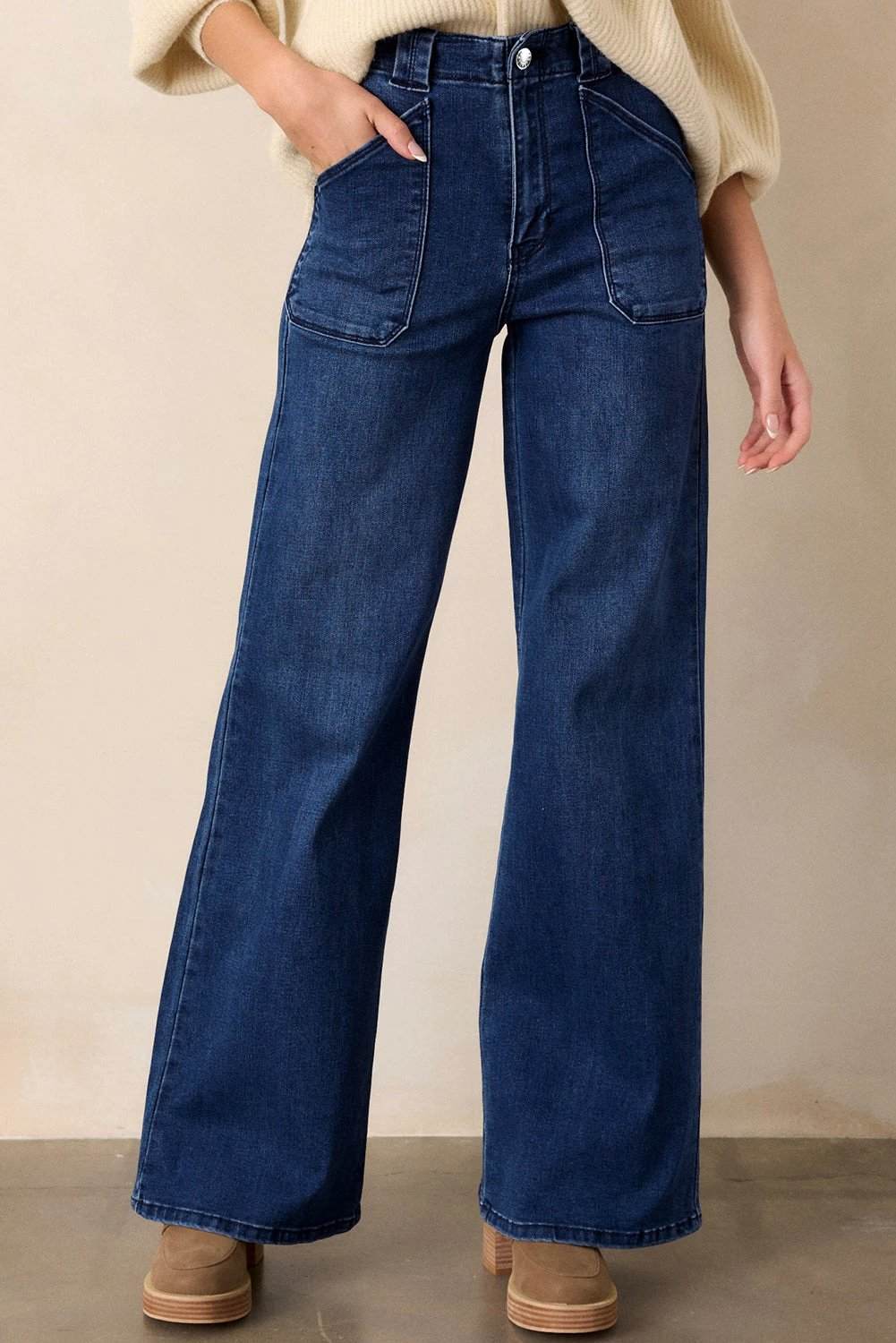
Wide-leg jeans need enough room in the waist and hip to hang properly. Too tight at the top, and the drape looks off. Too loose, and the jeans can feel bulky instead of polished. These are often best when they fit neatly through the top block and fall cleanly from there.
Bootcut and flare jeans rely on balance. They should contour the waist and hips, then open gradually below the knee. If they are too tight in the thigh, the shape can feel dated rather than flattering. If they are too loose overall, they can lose structure.
Boyfriend and relaxed fits are designed to have extra ease. That does not mean sizing up automatically. In many cases, your usual size already includes that slouchy shape.
Common signs your jeans are the wrong size
Some fit issues show up right away. Others appear after an hour of wear.
If the waistband digs in when you sit, the size may be too small, or the rise may simply not suit you. If the waistband gaps at the back, you may need a different cut rather than a smaller size. Curvier hips and a smaller waist often need jeans designed with more shape through the seat.
If the front fly area pulls or bunches, the fit is off through the rise or hip. If the thighs feel tight but the waist fits, a straight size change may not solve it - you may need a different silhouette or more stretch. If the knees bag out quickly and the seat starts to sag, the jeans are likely too large or too stretchy for the structure you want.
Length matters too. Cropped jeans should hit intentionally, not awkwardly. Full-length jeans should work with the shoes you actually wear, whether that is sneakers, flats, ankle boots, or heels.
Smart tips for online denim shopping
When you cannot try on before buying, product details do the heavy lifting. Start with the size chart, then read the fabric composition. A jean made from 99% cotton and 1% spandex will feel very different from one made with a higher stretch blend.
Next, look for fit notes. Words like fitted, relaxed, true to size, or size up if between sizes are useful when they are specific. Pay attention to model info too, especially height and the size worn. That gives you a better sense of length and proportion.
It also helps to think about use. For all-day wear, travel, and everyday comfort, a little stretch usually wins. For a more structured, trend-right look with blazers, boots, or a polished top, rigid or low-stretch denim often delivers a sharper silhouette. At J&H Apparel, that balance of comfort and put-together style is exactly what makes everyday dressing feel easier.
The best way to find your most flattering fit
The most flattering jeans are not always the tightest pair or the pair with the smallest number on the tag. They are the ones that sit smoothly, move comfortably, and work with the real shape of your body.
If you want waist definition, high-rise straight or flare jeans are often a strong choice. If you want an easy, laid-back feel, relaxed straight or boyfriend fits usually give you more room without looking oversized. If you like a clean, sleek outfit formula, skinny or slim straight jeans with stretch can still earn their place.
It is also worth considering what you wear jeans with most often. If your closet leans casual, a cropped straight jean may get the most use. If you dress up basics for dinner or weekends out, darker washes and longer inseams can look more polished. The right size is not just about body measurements. It is also about how the jeans fit into your life.
A great pair of jeans should make getting dressed feel fast, fun, and versatile. Start with measurements, check the fabric, pay attention to rise and silhouette, and trust comfort as much as the tag. When denim fits your body and your routine, you stop thinking about the size and start enjoying the outfit.