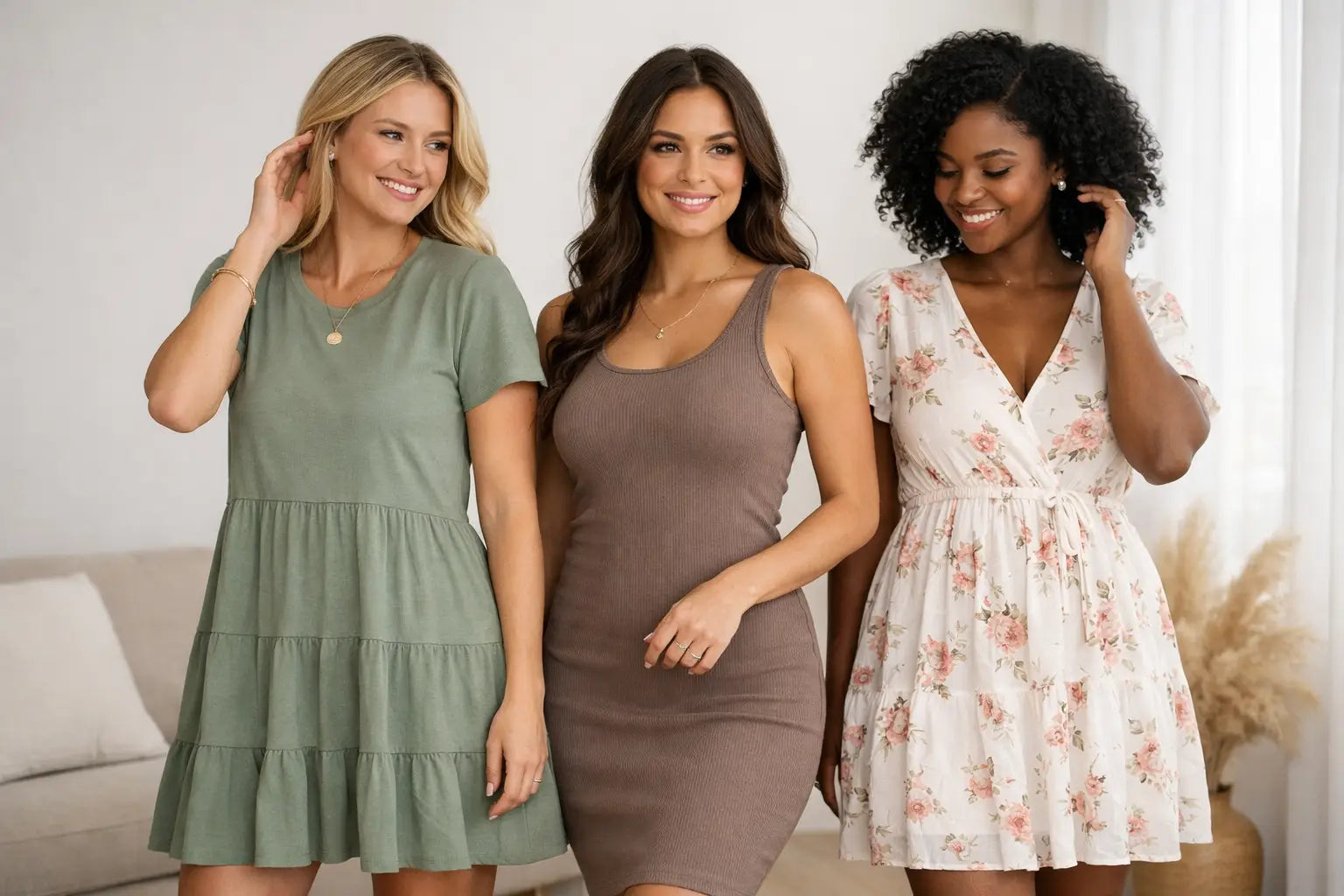
You can love the color, the print, and the price - but if the fit feels off, the dress usually stays in the closet. That is exactly why a good women's dress fit guide matters. The right fit does more than look polished. It helps you move through your day comfortably, feel confident the second you walk out the door, and get more wear out of pieces you already love.
Fit can also be the difference between a dress that feels fussy and one that becomes a repeat favorite. If you have ever wondered why one midi dress feels effortless while another keeps riding up, pulling, or falling flat, the answer is usually in the cut, fabric, and where the dress sits on your frame.
How to use a women's dress fit guide
The easiest way to shop smarter is to stop focusing only on size labels and start paying attention to fit points. Sizes can vary from one brand or silhouette to the next, but the way a dress fits at the shoulders, bust, waist, hips, and hem tells you far more than the number on the tag.
Start with the area you usually fit first. For some women, that is the shoulders and bust. For others, it is the waist or hips. If that anchor point fits well, the rest of the dress is much more likely to feel balanced. A dress can be roomy in one area and still look great, but if it is too tight or awkward in the area that matters most to your shape, it tends to show up in the way it moves.
Fabric matters just as much as silhouette. A woven dress with no stretch will fit very differently from a ribbed knit or soft jersey style. If you want flexibility for long workdays, travel, or weekends, a little stretch can make a huge difference. If you want a cleaner, more structured look, a non-stretch fabric can feel more polished, but you may need to be more precise with sizing.
The key fit points to check first
Before you decide whether a dress works, check how it fits through a few important areas. This is where comfort and style come together.
Shoulders and neckline
The shoulders set the tone for the whole dress. If the shoulder seam sits too far down the arm, the dress can look oversized in a way that feels sloppy instead of relaxed. If it pulls across the upper back, the fit may feel restrictive all day. Necklines matter too. A neckline should lay smoothly without gaping, digging, or shifting every time you move.
Bust and armholes
A good bust fit should feel smooth, not strained. If buttons pull, the fabric looks stretched, or the chest feels tight when you sit down, the dress is too small in that area. Armholes should also feel comfortable. Too low, and the fit can look baggy. Too high, and the dress can rub or limit movement.
Waist placement
This is one of the biggest game changers in any dress. A waist seam that hits your natural waist can create shape and definition. A higher waist can feel easy and flattering in flowy silhouettes. A dropped waist gives a more relaxed look, but it depends on the dress and your style preference. The best option is the one that feels balanced on your body, not the one that follows a rule.
Hips and overall drape
A dress should skim, not fight you. If it catches at the hips and then pulls across the front or back, it may not be the right cut. On the other hand, if it is too oversized through the hips, the whole shape can lose definition. Look for a fit that allows movement while still keeping the silhouette intentional.
Hem length
Length changes the entire feel of a dress. A mini can feel fun and easy, but you want enough coverage to move comfortably. A midi is versatile and polished, though the exact spot where it hits your leg matters. A maxi can feel effortless and elegant, but if it is too long, it quickly becomes impractical for everyday wear.
Which dress silhouettes work best for different needs
Not every dress has to do everything. Some cuts are better for office days, some for casual afternoons, and some for those plans that start with dinner and turn into a full night out.
Fit-and-flare dresses
This silhouette is a favorite for a reason. It is fitted through the upper body and opens up through the skirt, which creates shape without feeling tight. It works especially well if you want a feminine, balanced fit that moves easily from work to brunch to events. The trade-off is that the waist placement has to be right. If it hits too high or too low, the dress can feel less flattering than intended.
Shift dresses
A shift dress is straight through the body with a relaxed feel. It is great for busy days when comfort matters, but you still want to look put together. This style works beautifully with sandals, sneakers, or a jacket. The key is making sure it does not pull across the bust or feel boxy at the shoulders.
Wrap dresses
Wrap dresses are known for flexibility because they adjust more easily than structured styles. They can be a great option if your measurements fall between sizes or if you like a more customizable fit. The one thing to watch is neckline coverage. Some wrap styles need a cami or a small adjustment depending on how much coverage you prefer.
Body-skimming knit dresses
These dresses can be incredibly comfortable and flattering because they move with you. Soft knit styles are easy for travel, layering, and everyday wear. The difference between chic and clingy usually comes down to fabric weight. A thicker knit often gives a smoother look, while very thin fabric may highlight more than you want.
Smocked and tiered dresses
These styles are popular because they feel comfortable, easy, and current without trying too hard. Smocking offers flexibility through the bust or waist, while tiered skirts create movement. They are ideal when you want a breezy fit, but it helps to watch volume. Too much fabric can overwhelm the shape if the proportions are off.
Fit tips that make online dress shopping easier
Shopping online gets much simpler when you know what details to look for. Product descriptions, measurements, and fabric notes can save you from guessing.
Start with your own measurements, especially bust, waist, and hips. Compare those numbers to the size chart instead of ordering based on habit alone. If the dress has stretch, you may prefer a closer fit. If it is woven and structured, you may want a little extra room.
Then read the fit description carefully. Words like fitted, relaxed, true to size, body-skimming, or oversized are there for a reason. They help set expectations before the dress arrives. If a style is meant to be loose, sizing down for a tighter fit can change the whole look. If a style is meant to be sleek, sizing up too much can throw off the silhouette.
It also helps to think about shoes before you buy. A midi dress that works perfectly with heels may hit differently with flats or sneakers. The same goes for maxis, especially if you are planning to wear them casually.
Common fit issues and what they usually mean
Sometimes a dress is close, but not quite right. Knowing what the issue means can help you choose better the next time.
If the dress rides up when you walk, it may be too snug through the hips or thighs. If the neckline gaps, the upper fit may be too loose or the cut may not suit your proportions. If the waist seam feels off, the silhouette may not align with where you naturally carry shape. If the fabric twists or pulls, the dress may simply not be cut for the balance you need.
That does not mean the dress is bad. It just means the fit is not working for your body or your day. The goal is not to force every trend to fit. It is to find the styles that make getting dressed feel easy.
Choosing the right fit for your real life
The best dress fit is not only about how it looks standing still in a mirror. It is about whether you can sit, walk, reach, commute, and go about your day without adjusting it every five minutes. A dress for date night might be more fitted than one for errands. A vacation dress might be breezier than one you wear to work. It depends on where you are going and how you want to feel when you get there.
That is where a practical approach really helps. Build around silhouettes you know you will actually wear. A comfortable midi for weekdays, an easy casual dress for weekends, and one polished option for dinners or events can go much further than a closet full of maybe pieces.
At J&H Apparel, that real-life approach to fit matters because style should feel simple, flattering, and wearable. When a dress fits well, it does not just look better on the hanger or in a photo. It becomes the piece you reach for when you want to feel confident fast.
The right fit should make your day easier, not more complicated. When you find dresses that move with you, flatter naturally, and suit the life you actually live, getting dressed starts to feel a lot more fun.


